Notification Settings

The Notification Settings section in Orangescrum Cloud allows you to customize how and when you receive updates related to your projects and tasks.

You can choose between email notifications and desktop notifications to stay on top of all important activities — from new tasks to comments and status changes.

This feature helps ensure you never miss critical updates while keeping your inbox and workspace clutter-free.

Adjusting notification preferences gives you complete control over the alerts you receive — whether you prefer instant updates or minimal interruptions.

Types of Notifications

1. Email Notifications

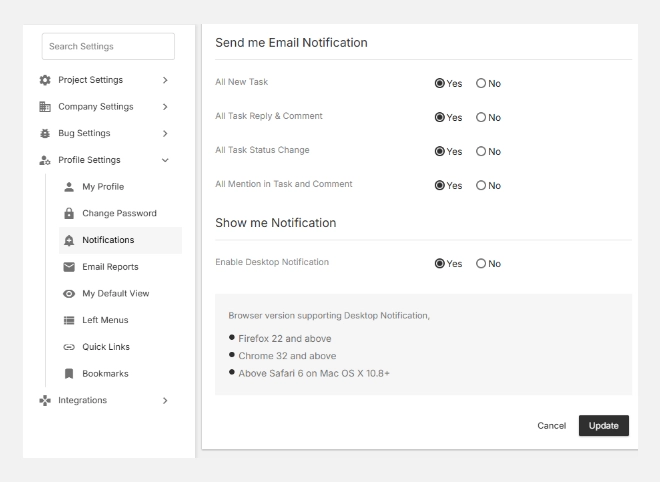
Receive instant email alerts for important events in your projects. You can enable or disable any of the following:

Notification Type Description
All New Task Get notified every time a new task is created and assigned to you or your project.
All Task Reply & Comment Receive emails when someone replies to or comments on a task you’re part of.
All Task Status Change Stay informed whenever the task status changes (e.g., In Progress → Completed).
All mentions in the Task and Comment Receive notifications whenever someone mentions you using @yourname in tasks or comments.

To modify these, simply select Yes or No next to each option.

2. Desktop Notifications

Stay updated directly from your browser without checking your email.

Turn on Enable Desktop Notification to receive alerts for new tasks, comments, or mentions while working.

Supported browser versions include:

  • Firefox v22 and above
  • Chrome v32 and above
  • Safari v6 (Mac OS X 10.8+) and above

Make sure browser notifications are allowed for Orangescrum Cloud in your browser settings.

How to Update Notification Settings

  1. Go to Settings → Profile Settings → Notifications.
  2. Choose Yes or No for each email notification option.
  3. Enable or disable desktop notifications as needed.
  4. Click Update to save your preferences.
How to update notification settings

Best Practices

✅ Keep Task Status and Mentions notifications enabled to stay in sync with your team.
✅ Use desktop notifications if you prefer quick updates without opening your inbox.
✅ Review notification settings periodically to match your current workflow.

With Notification Settings in Orangescrum Cloud, you can balance awareness and focus — staying informed about what matters most, without unnecessary distractions.
Set Password

The Change Password section in Orangescrum Cloud allows users to securely update their account password.

Changing your password regularly helps keep your workspace and project data safe from unauthorized access.

This feature is especially useful when you suspect unusual activity, share a system temporarily, or need to comply with your organization’s security policy.

Tip: Always choose a strong and unique password — avoid reusing old or common passwords.

How to Change Your Password

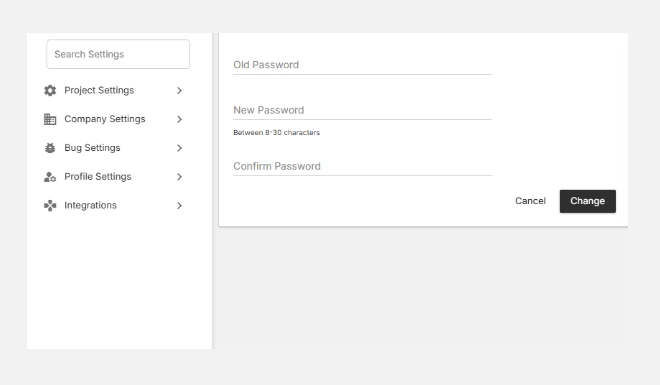
  1. Go to Settings → Profile Settings → Change Password.
  2. Enter your Old Password to verify your identity.
  3. Type a New Password — it must be 8 to 30 characters long.
  4. Re-enter the same password in Confirm Password.
  5. Click Change to update your credentials.
  6. You’ll see a confirmation once your password is successfully changed.

How to change your password

Best Practices for Password Security

✅ Change your password at least once every 90 days.
✅ Never share your credentials with others.
✅ Use a secure password manager to store passwords safely.
✅ Immediately update your password if you notice suspicious login activity.

The Change Password feature in Orangescrum Cloud ensures that every user maintains account confidentiality and keeps their projects, tasks, and reports protected at all times.

My Profile

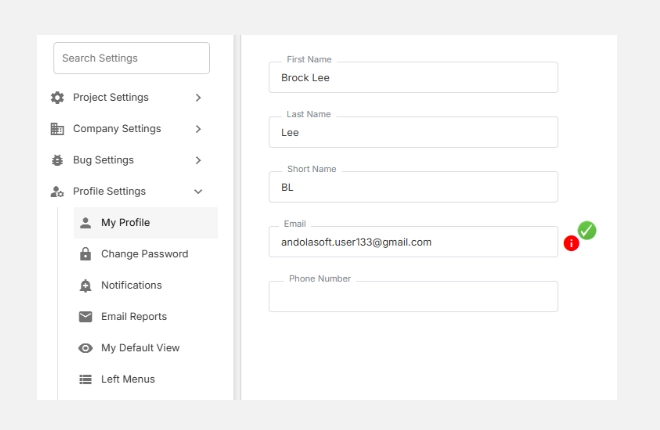
The My Profile section allows each user to personalize their Orangescrum experience by managing their identity, contact details, and workspace preferences.

Here, you can update your name, email, time zone, language, time format, and upload a profile image — ensuring your account is accurate and consistent across your projects.

Keeping your profile updated helps team members identify you easily in projects, tasks, and reports.

Fields Available in My Profile

Field Description
First Name / Last Name Your official name as it appears across projects, tasks, and communications.
Short Name Abbreviation or initials (e.g., AN) used in dashboards, comments, and quick views.
Email Your registered email address used for login and notifications.
Phone Number Optional — add your contact number for internal reference or team directories.
Time Zone Choose your preferred time zone to ensure all tasks, logs, and reports show accurate timestamps.
Daylight Saving (DST) Enable or disable DST adjustments based on your region.
Language Select your preferred language for interface labels and menus.
Time Format Choose between a 12-hour or 24-hour format for all date/time displays.
Skills Mention your core skills or areas of expertise — useful for team visibility and resource allocation.
Profile Image Upload a profile photo to personalize your workspace and make collaboration more intuitive.

How to Update Your Profile

  1. Go to Settings → Profile Settings → My Profile.
  2. Update the desired fields such as name, email, or timezone.
  3. Click Save to apply your changes.
  4. Your updates will instantly reflect across your Orangescrum account.

How to update your profile

Best Practices

✅ Use your official name and company email for team identification.
✅ Keep your time zone and language settings aligned with your working location.
✅ Update your profile photo to help teammates recognize you in discussions and reports.
✅ Review and refresh your details periodically, especially when changing roles or locations.

With My Profile in Orangescrum Cloud, every user can create a personalized workspace that reflects their identity, time preferences, and communication style — ensuring smoother collaboration and better visibility across teams.

Profile Settings

The Profile Settings in Orangescrum Cloud allow each user to customize how they interact with the platform. From managing your personal details and password to setting up notifications, reports, and quick-access menus — everything can be fine-tuned here to match your workflow.

These settings enhance productivity and comfort, ensuring you get the right information at the right time while keeping your workspace organized and secure.

Key Options in Profile Settings

Option Description
My Profile Update your personal details such as name, email, and profile image.
Set Password Change your login password securely at any time.
Notifications Control which alerts you receive for tasks, projects, or updates.
Email Reports Schedule and receive regular reports about projects, tasks, or time logs directly in your inbox.
My Default View Choose your preferred dashboard or module view when you log in.
Left Menus Customize the items displayed on your left navigation panel for faster access.
Quick Links Create shortcuts to your most-used modules, pages, or tools.
Bookmarks Save and manage frequently accessed pages or project views for quick reference.

Tip: Adjusting your profile settings helps streamline your daily workflow and ensures that Orangescrum adapts perfectly to your role, preferences, and priorities.

Bug Resolution

Bug Resolution in Orangescrum Cloud represents the final status or action taken on a reported issue.

It helps your team record how each bug was handled — whether it was fixed, rejected, duplicated, or could not be reproduced.

This setting brings clarity to your QA cycle and enables better reporting on software quality and resolution trends.

Example: A bug marked as Fixed indicates it has been resolved, while Duplicate shows that a similar issue already exists in the tracker.

Why Use Bug Resolution

  • Clarify outcomes: Record the final result of every issue.
  • Enhance reporting: Filter and analyze resolved, duplicate, or invalid bugs.
  • Track QA efficiency: Understand how many bugs are successfully fixed versus deferred.
  • Reduce confusion: Maintain transparency on why an issue was closed.

Accessing Bug Resolution Settings

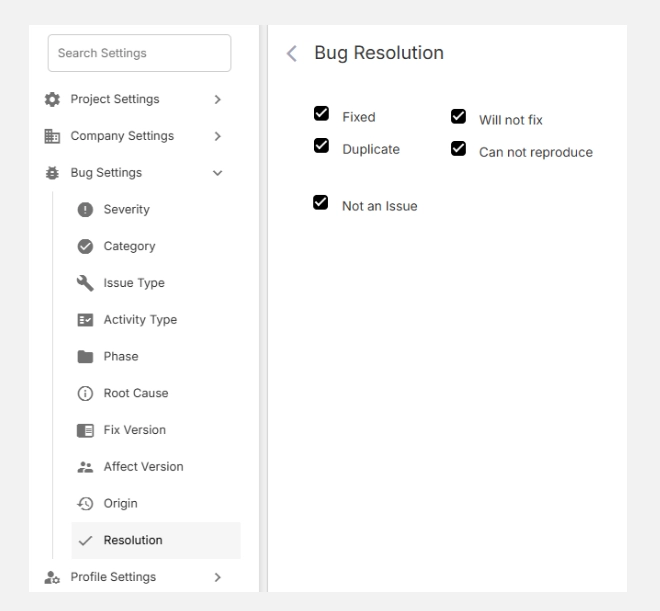
  1. Navigate to Settings → Bug Settings → Resolution.
  2. You’ll see a predefined list such as Fixed, Duplicate, Will Not Fix, Can Not Reproduce, Not an Issue, and N/A.
  3. You can add, edit, or remove resolutions to align with your internal QA process.

Accessing bug resolution settings

Common Bug Resolution Types

Resolution Description
Fixed The bug has been successfully corrected and verified.
Duplicate The bug is already reported in another ticket.
Will Not Fix The issue is acknowledged but won’t be fixed (low impact or outside scope).
Can Not Reproduce QA could not replicate the bug based on current data.
Not an Issue The reported behavior is intentional or not a defect.
N/A (Not Applicable) The bug report was invalid or no longer relevant.

Tip: Standardizing resolutions helps your reporting stay accurate across multiple projects and releases.

Adding a New Bug Resolution

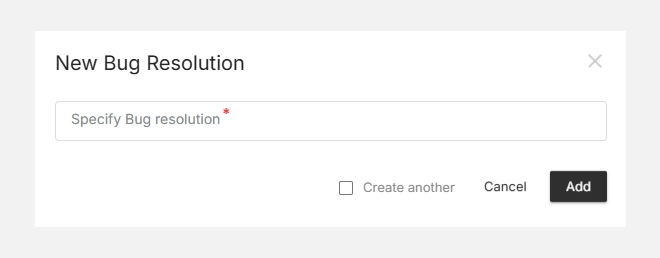
  1. Click + New Bug Resolution (top-right corner).
  2. Enter a clear, descriptive Resolution Name (e.g., Deferred, Won’t Fix in Current Version).
  3. Click Add to save it.
  4. The new option will be available for selection when updating a bug’s status.

Adding a new bug resolution

Editing or Deleting Resolutions

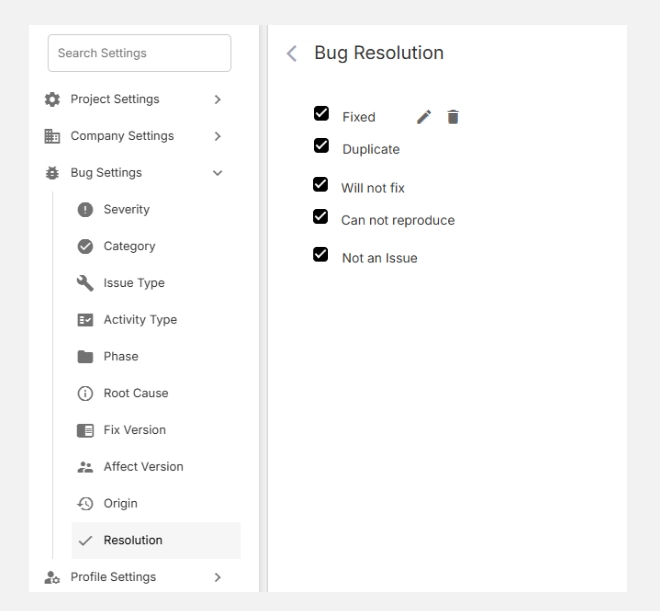
  • To Edit, click the icon next to a resolution.
  • To Delete, click the icon to remove outdated options.

Editing or deleting resolutions

Note: Removing a resolution does not delete existing bugs but unlinks that resolution type from future records.

Bug Origin

Bug Origin in Orangescrum Cloud helps teams trace where in the project lifecycle a defect was introduced — such as during Requirements, Design, or Development.

By recording the origin of bugs, project managers and QA teams can analyze process gaps, improve quality controls, and reduce recurrence in future cycles.

Example: If a defect is traced back to the Requirements phase, it means the issue originated from unclear specifications rather than poor coding.

Why Use Bug Origin

  • Improve root cause analysis: Identify the source of recurring defects.
  • Enhance team accountability: Pinpoint which stage needs better QA checks.
  • Improve quality metrics: Track bug density by lifecycle phase.
  • Strengthen prevention strategies: Focus on process improvements early in the cycle.

Accessing Bug Origin Settings

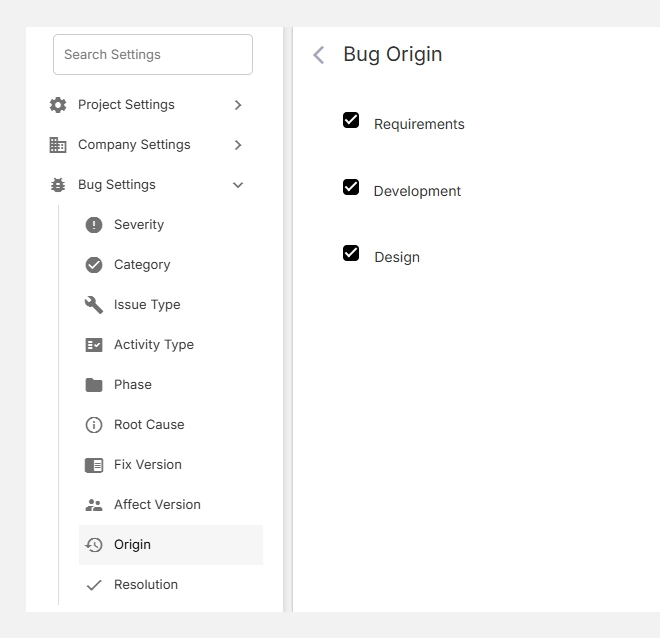
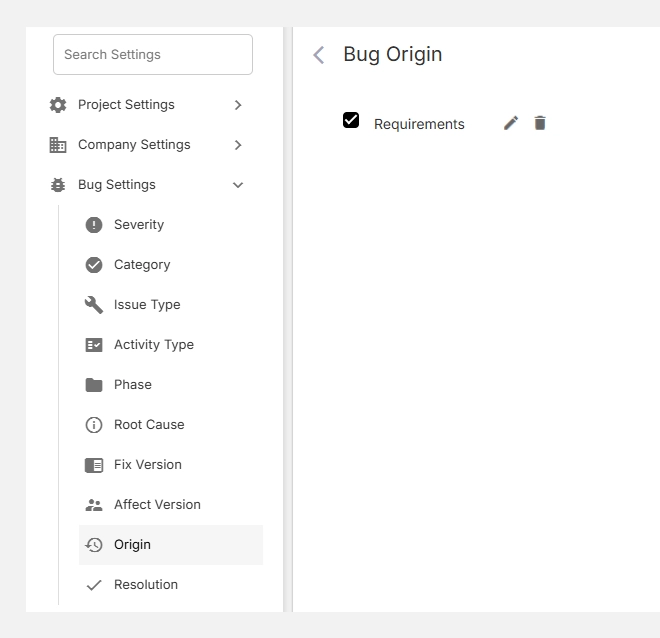
  1. Go to Settings → Bug Settings → Origin.
  2. You’ll see default origins like Requirements, Design, and Development.
  3. Add or edit these to match your internal project lifecycle.

Accessing bug origin settings

How It Works

Each bug logged in Orangescrum can be tagged with its Origin.

This makes it easy to track not just when an issue occurred but where it started.

Field Description Example
Bug Origin The phase where the defect was introduced. Requirements, Design, Development
Usage Selected during bug reporting or analysis. Helps QA trace the source of errors

Tip: Combine “Origin” with “Root Cause” and “Phase” fields to conduct deeper defect trend analysis.

Adding a New Bug Origin

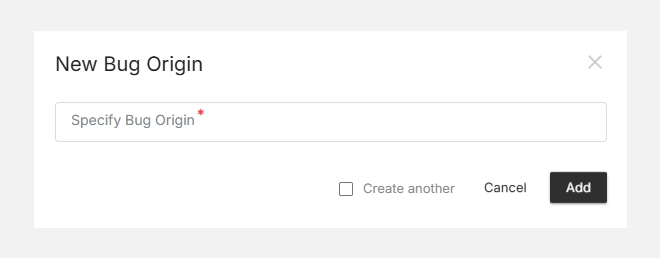
  1. Click + New Bug Origin (top-right).
  2. Enter the Origin Name — e.g., Testing, Deployment, Documentation.
  3. Click Add to save.
  4. The new origin will now appear in your selection list when creating or updating bugs.

Adding a new bug origin

Editing or Deleting Origins

  • Click Edit to rename an existing origin.
  • Click Delete to remove outdated or unused origins.

Editing or deleting origins

Note: Removing a Bug Origin unlinks it from existing bugs but doesn’t delete those issues.