Single Sign-On (SSO) Integration

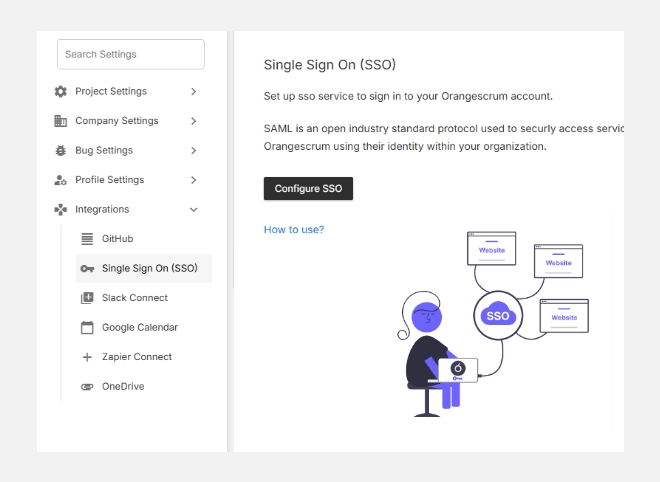
The Single Sign-On (SSO) integration in Orangescrum Cloud enables users to securely access their workspace using existing organizational credentials.

It eliminates the need to remember multiple usernames and passwords, streamlining access while enhancing security for teams and enterprises.

With SSO, you can log in once through your company identity provider and instantly access Orangescrum — no separate password required.

Why enable SSO?

Simplified Access: One secure login for all your applications.
Enterprise-Grade Security: Centralized authentication and compliance with your company’s identity policies.
Time-Saving: No need to reset forgotten passwords or manage separate credentials.
Access Control: Admins can manage user access centrally via your identity provider (IdP).

How to Enable SSO in Orangescrum

  1. Navigate to Settings → Integrations → Single Sign-On (SSO).
  2. Click Enable SSO (if not already active).
  3. Choose your identity provider (e.g., Google Workspace, Microsoft Azure AD, Okta, or other SAML-supported IdPs).
  4. Follow the setup prompts to authenticate and authorize your workspace.
  5. Once enabled, all authorized users can log in using their company SSO credentials.

How to enable single sign on in Orangescrum

After successful setup, your page will show “Single Sign On (SSO) is Enabled” with options to Edit or Remove the configuration.

Managing Your SSO Integration

  • Edit: Update configuration details, change IdP settings, or reauthenticate.
  • Remove: Disable SSO and revert to standard Orangescrum email/password login.

If you remove SSO, users will need to log in with their original Orangescrum credentials.

Supported Identity Providers

Provider Authentication Type
Google Workspace OAuth 2.0
Microsoft Azure AD SAML / OAuth
Okta SAML 2.0
OneLogin SAML 2.0
Custom SAML IdP SAML Configuration

Benefits of SSO for Organizations

Centralized User Management: Control who can access Orangescrum via your company directory.
Enhanced Compliance: Meet enterprise-grade security standards (SOC 2, ISO 27001, etc.).
Reduced IT Overhead: Minimize password resets and helpdesk tickets.
Faster Onboarding: Add or remove users instantly through your existing identity management system.

Summary

Feature Description
Single Login Access Orangescrum using existing company credentials.
Secure Authentication SAML/OAuth support for leading IdPs.
User Control Centralized management of user access.
Edit/Remove Options Easily update or disable SSO anytime.

With Orangescrum SSO, you get enterprise-grade security, faster access, and complete control — all in one seamless login experience.

GitHub Integration

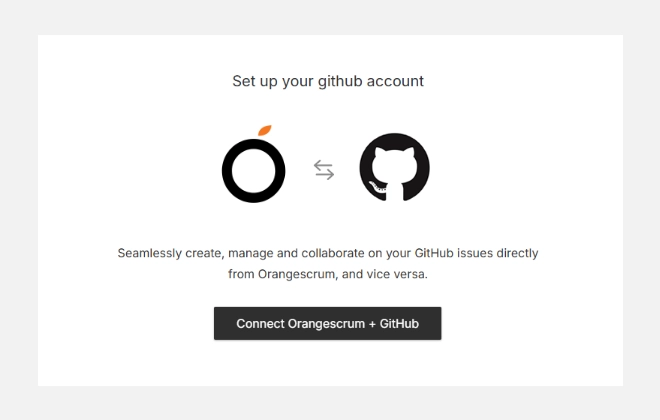
The GitHub Integration in Orangescrum Cloud bridges your project tasks and your development workflow.

By connecting your GitHub repository, you can link commits, pull requests, and code updates directly with Orangescrum tasks — giving your team complete visibility from code to completion.

No more switching between tools. Manage project progress, issues, and commits all in one place.

Key Benefits

Automatic Tracking: Sync GitHub commits and pull requests to corresponding Orangescrum tasks.
Improved Collaboration: Let non-developers see project progress without accessing GitHub.
Traceability: Know exactly which code changes relate to which task or bug.
Productivity Boost: Developers can close tasks via commit messages using task IDs.

How to Set Up GitHub Integration

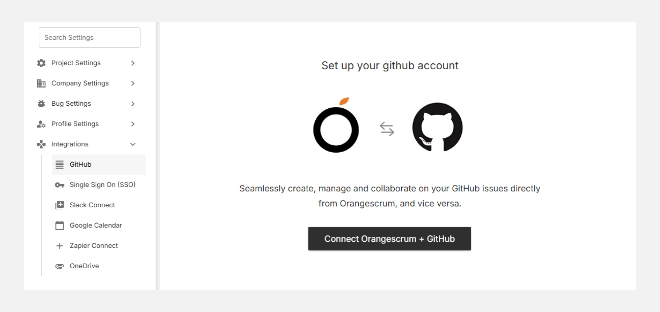
  1. Go to Settings → Integrations → GitHub.
  2. Click on Add Sync to begin setup.
  3. Authorize Orangescrum to access your GitHub account.
  4. Select the repository you want to connect to.
  5. Configure your sync preferences (e.g., push updates, pull requests, or commit linking).
  6. Save your configuration — your GitHub data will now begin syncing automatically.

How to set-up GitHub integrations

Using the Integration

Once integrated:

  • Each commit or pull request referencing a task ID (e.g., #123) will automatically link to that task in Orangescrum.
  • The task’s activity stream will display the associated GitHub updates.
  • Team members can review code history, status, and contributors without leaving Orangescrum.

You can disconnect or modify your sync settings anytime by returning to this GitHub integration page and selecting “Edit” or “Remove Sync.”

Best Practices

  • Use consistent task IDs in your commit messages (e.g., “Fix validation bug #205”).
  • Assign proper access rights — only authorized users should connect repositories.
  • Sync only relevant repositories to avoid unnecessary clutter.

Troubleshooting

If commits aren’t syncing:

  • Verify that your GitHub repository is linked to the correct workspace.
  • Ensure task IDs exist and are referenced properly in commit messages.
  • Reauthorize GitHub if tokens have expired.

Summary

Feature Description
Sync Repositories Connect multiple GitHub repositories with Orangescrum projects.
Commit Linking Automatically link code commits to Orangescrum tasks.
Pull Request Tracking View pull requests and merges in task history.
Activity Visibility Get real-time updates on code progress within Orangescrum.

With GitHub Integration, Orangescrum becomes your all-in-one development dashboard — connecting planning, execution, and delivery in one synchronized flow.

Integrations

The Integrations module in Orangescrum Cloud empowers teams to unify their work ecosystem by connecting with popular third-party tools.

It bridges project management, communication, development, and storage platforms — allowing you to automate actions, share updates, and manage everything from one central workspace.

Integrations make Orangescrum the hub of your daily operations — where every app speaks the same language of productivity.

Why Use Integrations

Integrations help you:

✅ Eliminate repetitive manual updates.
✅ Keep all team members in sync across apps.
✅ Maintain real-time visibility on project progress.
✅ Automate task creation, status updates, and notifications.
✅ Simplify sign-ins and boost collaboration.

Available Integrations

Integration Description
GitHub Connect your GitHub repositories to Orangescrum. Automatically link commits, pull requests, and code updates with specific tasks or projects for streamlined development tracking.
Single Sign-On (SSO) Simplify login management by enabling secure single-sign-on access for all team members using your company credentials.
Slack Connect Stay updated in real time — receive task notifications, mentions, and project alerts directly in your Slack channels without switching tabs.
Google Calendar Sync project milestones, task due dates, and timesheets with your Google Calendar to stay on top of deadlines and meetings.
Zapier Connect Automate workflows by linking Orangescrum with over 5,000 apps on Zapier — from CRM tools to marketing automation platforms.
OneDrive Attach, share, and manage your files securely by integrating OneDrive with Orangescrum for centralized document collaboration.

How to Access Integrations

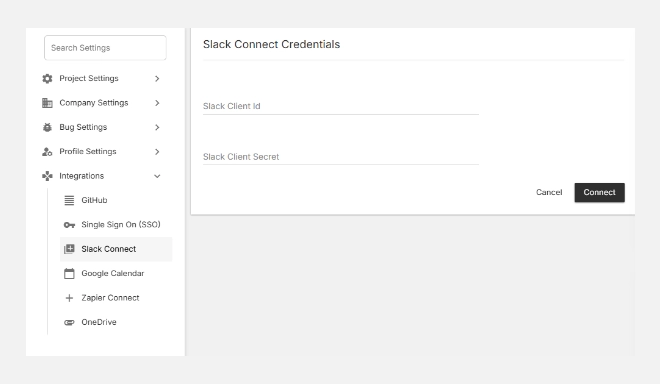
  1. Go to Settings → Integrations.
  2. Choose the app you want to connect (e.g., Slack, GitHub, or Google Calendar).
  3. Click the Connect button and authorize your account.
  4. Follow the on-screen prompts to configure permissions and settings.

How to Access Integrations

Once connected, data automatically syncs between Orangescrum and the integrated tool.

Benefits

Centralized Collaboration: Bring code, files, and communication into one place.
Enhanced Productivity: Reduce app-switching and manual effort.
Better Visibility: Link tools so updates reflect instantly across systems.
Secure & Scalable: Every integration follows enterprise-grade authentication and permissions.

With Orangescrum Integrations, you can turn your workspace into a connected productivity powerhouse — bridging communication, code, and collaboration effortlessly.

Quick Links Settings

The Quick Links Settings in Orangescrum Cloud let you customize which shortcuts appear in your top navigation menu.

These quick links provide one-click access to essential tools like creating new projects, checking reports, tracking resources, or managing company-wide settings — all from anywhere in your workspace.

Think of Quick Links as your personal control panel — helping you reach your most-used modules faster.

Categories of Quick Links

Quick Links are organized into four major sections for better customization and visibility.

Category Description
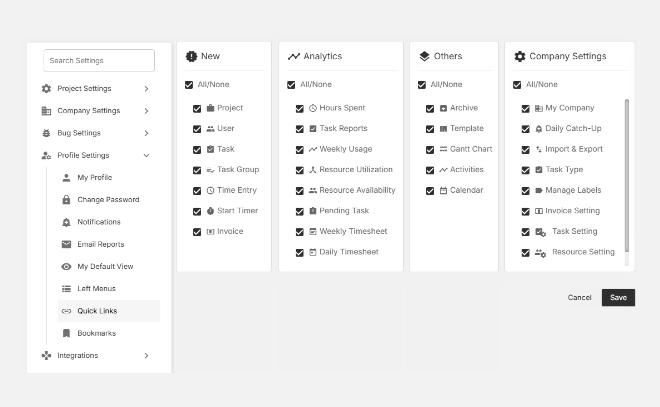
New Create or add new items quickly such as projects, tasks, users, or invoices.
Analytics Access time, usage, and performance reports instantly.
Others Navigate to general tools like Gantt charts, templates, activities, or calendars.
Company Settings Jump directly to workspace and configuration settings without switching menus.

New

The New section provides shortcuts to create new records within Orangescrum.

Option Description
Project Create a new project instantly.
User Add new users to your workspace.
Task / Task Group Quickly add tasks or group them under phases.
Time Entry Log work hours directly.
Start Timer Start real-time time tracking.
Invoice Generate a new invoice for a project.

Toggle “All/None” to select or deselect all creation shortcuts at once.

Analytics

This section gives quick access to performance, utilization, and productivity insights.

Option Description
Hours Spent Review total logged hours per user or project.
Task Reports Generate and view reports on task progress.
Weekly Usage Monitor overall workspace activity.
Resource Utilization / Availability Analyze workload and identify free capacity.
Pending Task View tasks still awaiting completion.
Weekly / Daily Timesheet Access summarized or detailed timesheet views.

Ideal for managers and team leads tracking team performance.

Others

The Others section gives access to essential productivity tools and visual aids.

Option Description
Archive Access archived projects or tasks.
Template Manage saved task or project templates.
Gantt Chart Visualize project timelines and dependencies.
Activities View recent activity logs and updates.
Calendar See upcoming deadlines and events.

Company Settings

Get direct shortcuts to key configuration modules.

Option Description
My Company Manage your company information and workspace identity.
Daily Catch-Up Access daily progress summaries.
Import & Export Upload or download project/task data in bulk.
Task Type / Manage Labels Customize how tasks are categorized.
Invoice / Task / Resource Settings Manage project billing, task defaults, and resource configuration.

Use this section to quickly reach admin-level settings.

How to Customize Quick Links

  1. Go to Settings → Profile Settings → Quick Links.
  2. Review each category (New, Analytics, Others, Company Settings).
  3. Check or uncheck the boxes beside each feature to show or hide it.
  4. Click Save to apply your preferences.

How to customize quick links

Your selected shortcuts will appear as icons under the Quick Links menu at the top of your Orangescrum workspace.

Benefits

Faster Navigation – Access frequently used features in one click.
Role-based Control – Customize links depending on whether you’re a team member, project lead, or admin.
Simplified Workflow – No need to switch menus or search for common actions.

With Quick Links in Orangescrum Cloud, your most important tools are always one click away — saving time and keeping your workflow seamless.

Left Menu Settings

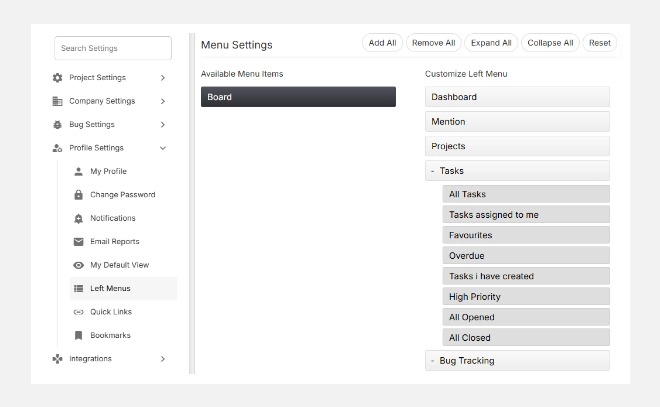
The Left Menu Settings in Orangescrum Cloud allow you to fully personalize your sidebar navigation. 

You can decide which modules appear in your left menu, reorder them, or remove those you don’t use frequently — keeping your workspace clean and efficient.

This customization ensures that every user, from project managers to developers, can focus on the tools and views most relevant to their role.

Understanding the Interface

Available Menu Items

This section (on the left side) lists all the modules that are not currently part of your sidebar navigation. You can drag and drop or click to add them into your Customize Left Menu panel.

Customize Left Menu

This section (on the right side) shows the active items currently displayed in your sidebar.

You can:

  • Add or remove modules like Dashboard, Projects, Tasks, Reports, etc.
  • Expand or collapse menu groups such as Tasks, Reports, or Bug Tracking.
  • Reorder modules based on priority using drag and drop.

Default Menu Options

Here are the commonly available modules that can be customized:

Module Description
Dashboard View an overview of project performance and key metrics.
Mention Access all mentions and communication directed to you.
Projects Manage all ongoing and archived projects.
Tasks Navigate to task lists, Kanban boards, and task creation screens.
Bug Tracking Manage and track issues or bugs in one place.
Time Log Log work hours, review timesheets, and track productivity.
Resource Mgmt Monitor team workload and allocation.
Reports Access project progress, timesheet, and performance reports.
Status Workflow Customize task stages and approval flows.
Backlog Review tasks and items planned for future sprints.
Active Sprint Manage and track active sprint boards.
Project Template Quickly create new projects using saved templates.

Top Menu Actions

Action Description
Add All Instantly add all available menu items to your sidebar.
Remove All Clear the entire sidebar and start fresh.
Expand All / Collapse All Expand or collapse all menu sections at once.
Reset Restore your sidebar to the original default layout.

How to Customize Your Sidebar

  1. Go to Settings → Profile Settings → Left Menus.
  2. Review available menu items on the left.
  3. Drag and drop items to the right (Customize Left Menu) panel or click Add All.
  4. Reorder modules based on your daily use.
  5. Click Save to apply changes.

How to customize your sidebar

Benefits

Streamlined Navigation: Access the tools you need faster.
Role-based Efficiency: Tailor your sidebar to match your workflow — whether you’re a developer, project manager, or QA.
Declutter Your Workspace: Remove unused modules for a clean, distraction-free view.

With Left Menu Settings in Orangescrum Cloud, you design your own navigation experience — simple, fast, and completely personal.

My Default View

The My Default View section in Orangescrum Cloud allows every user to choose how they want to visualize their work — whether as a list, card, or board view.

By setting default views, you save time switching between layouts and create a personalized workspace that matches your workflow.

Customize your task, project, and time log views to focus on what matters most — productivity and clarity.

View Options

You can set default views for the following modules:

Module Available Views Description
Tasks List / Kanban / Calendar Choose how you want tasks to appear by default. The List View provides structured details, while Kanban gives a drag-and-drop visual workflow.
Time Log List / Weekly View logged hours in a simple list or weekly breakdown. Perfect for tracking time across days or projects.
Projects Card / List Display your projects as Cards for quick summaries, or as a List for a more detailed view.

How to Set Your Default Views

  1. Go to Settings → Profile Settings → My Default View.
  2. Select your preferred layout for each module — Tasks, Time Log, and Projects.
  3. Click Save to apply your preferences.

How to set your default views

Benefits of Custom Default Views

Saves Time: Skip switching layouts every time you log in.
Improves Focus: Work in the format that best fits your role — list for details, cards for visual flow.
Boosts Productivity: Each team member can tailor their workspace to their personal workflow style.

With “My Default View” in Orangescrum Cloud, you control how your workspace looks — ensuring every session starts exactly the way you like it.